
• Home
  • Search
  • Browse Collections
  • My Account
  • About
  • DC Network Digital Commons Network™
Skip to main content
UMKC School of Law Institutional Repository University of Missouri-Kansas City School of Law
  • Home
  • About
  • FAQ
  • My Account
  1. Home
  2. >
  3. Faculty Scholarship
  4. >
  5. Books

Books

 
Printing is not supported at the primary Gallery Thumbnail page. Please first navigate to a specific Image before printing.

Follow

Switch View to Grid View Slideshow
 
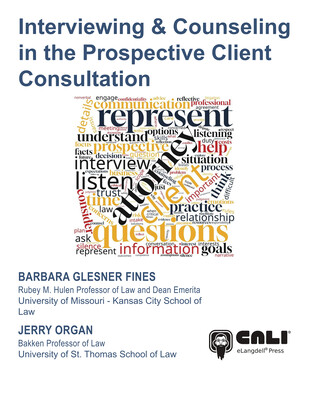
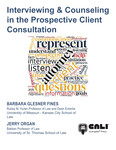
  • Interviewing & Counseling in the Prospective Client Consultation by Barbara Glesner Fines and Jerome M. Organ

    Interviewing & Counseling in the Prospective Client Consultation

    Barbara Glesner Fines and Jerome M. Organ

    INTERVIEWING & COUNSELING IN THE PROSPECTIVE CLIENT CONSULTATION is an interactive textbook faculty can adopt and adapt for many different uses: as a primary text in an interviewing and counseling course, as a secondary text in a lawyering skills course; as a resource to support client interviewing exercises in doctrinal or broader lawyering skills classes; or as training materials for preparing students for clinics, externships, and competitions. The text frames the instruction in the context of the initial interview of a prospective client, although the counseling portion of the text goes beyond what many attorneys might actually address in an initial interview. The knowledge and skills addressed in the text can apply equally to any conversation with a client or others involved in a matter. To some extent, the text could also be used in teaching about an examination of a witness in a deposition or hearing, though we have not drawn those parallels or distinctions. We have framed problems and discussion within a broad range of practice settings: civil and criminal; litigation, transaction, and compliance. Each chapter provides focused learning outcomes, instruction, quizzes and practice problems, and prompts for reflective writing or discussion. The supplementary teachers manual provides learning activities and simulation problems.

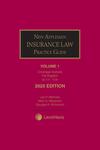
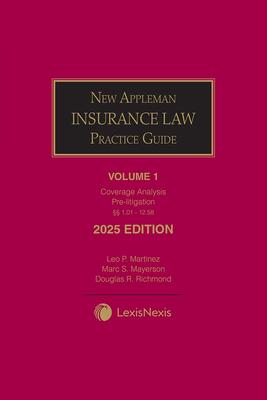
  • New Appleman Insurance Law Practice Guide by Leo P. Martinez, Douglas R. Richmond, Marc S. Mayerson, and Jeffery E. Thomas

    New Appleman Insurance Law Practice Guide

    Leo P. Martinez, Douglas R. Richmond, Marc S. Mayerson, and Jeffery E. Thomas

    New Appleman Insurance Law Practice Guide is the indispensable research tool that provides step-by-step guidance on each phase of an insurance coverage dispute along with strategies written by expert practitioners that help you win.

    Written from policyholder, insurer and judicial perspectives, this unique four-volume set combines savvy procedural guidance and authoritative analysis of the law. The task-based format is designed to fit comfortably into your work flow and guides you through how to analyze an insurance policy, determine the merits of a coverage dispute and then whether and how to successfully arbitrate, mediate, settle, sue, or defend. It helps you understand pertinent procedural rules and strategies as well as the substantive law applicable to all major insurance lines, including new analyses of intellectual property insurance, cyber insurance and personal and advertising injury coverage.

    Eighty expert authors, consultants and editors constituting many of the leading authorities in insurance law today contributed to this publication. The New Appleman Insurance Law Practice Guide features a variety of practice tips throughout the publication, including strategic points, timing requirement, warnings, traps to avoid and more. It also features hundreds of examples, over 200 checklists and dozens of forms to aid all phases of insurance coverage dispute practice. There are abundant sample searches and cross references that take you to pertinent ISO forms, and LexisNexis insurance and civil procedure publications to enable deeper research and facilitate finding answers to the most complex insurance coverage questions.

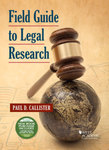
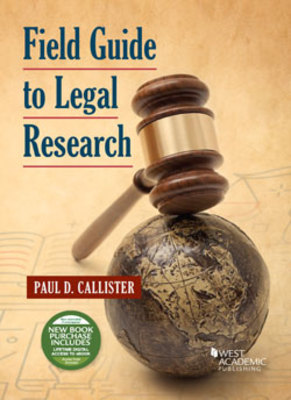
  • Field Guide to Legal Research by Paul D. Callister and Tove Klovning

    Field Guide to Legal Research

    Paul D. Callister and Tove Klovning

    Field Guide to Legal Research is a conceptual roadmap—not another data heavy treatise—for upper level law students, law clerks, and practicing attorneys. Grounded in a construct based pedagogy, it teaches readers to “work the problem,” classify a research task, and then align that problem type with the most effective sources and strategies. Like a true field guide, the book opens with a clear-eyed primer on generative AI, moves through a concise refresher of core research skills, and then systematically maps problem types to the resources that solve them. Later chapters dive deeply into representative challenges—ranging from agency practice and statistical questions to patent law hypotheticals—so readers can see the constructs in action. Throughout, abundant screenshots and visuals break down complex workflows, while end of chapter exercises invite deliberate practice in real world contexts. Instructors will appreciate the companion Teacher’s Manual, which layers on additional insights, sample assessments, and classroom activities to support competency based learning. Whether you are revisiting fundamentals or navigating today’s AI shaped information landscape, Field Guide to Legal Research equips you with a transferable mental map—one that turns legal research from a checklist of platforms into an adaptive, strategic discipline.

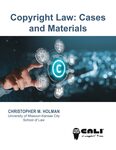
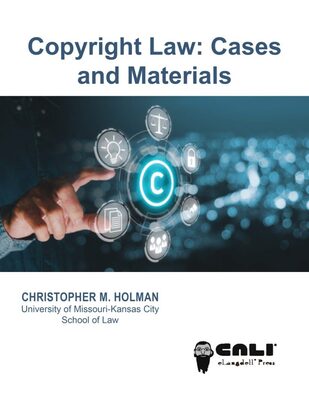
  • Copyright Law: Cases and Materials by Christopher M. Holman

    Copyright Law: Cases and Materials

    Christopher M. Holman

    Copyright Law: Cases and Materials is a casebook designed for a one-semester course on copyright law. The doctrinal principles of copyright law are presented primarily through edited judicial decisions, each followed by interactive “check your understanding” questions that include detailed explanations for correct and incorrect answers. A short list of “things to consider” is provided immediately prior to each decision, designed to orient students to particularly significant aspects of the decision and provide a more focused reading experience. The book also includes narrative sections that introduce or summarize some of the subject matter. The major doctrines of copyright law are systematically explored, including a chapter devoted to the Digital Millennium Copyright Act (DMCA) safe harbors and another chapter addressing recent cases involving copyright law and generative artificial intelligence (AI).

    The online Lawbooks version offers embedded interactive questions to help students understand and apply the material as they learn it.

    This casebook is also available as a PDF and in print. The PDF version includes direct links to the interactive questions on the Lawbooks website.

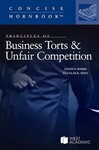
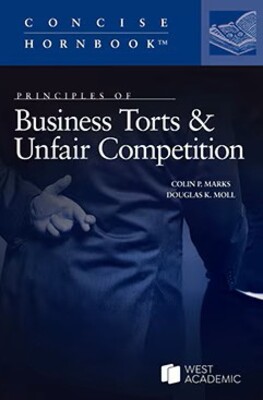
  • Principles of Business Torts & Unfair Competition by Colin P. Marks and Douglas K. Moll

    Principles of Business Torts & Unfair Competition

    Colin P. Marks and Douglas K. Moll

    Business torts and unfair competition practices generally focus on conduct that causes pure economic loss (rather than personal injury or property damage). Both areas form the core of a typical commercial litigation practice, and both reflect the type of conduct that society considers permissible (and impermissible) in a business context. Written in a clear and informative style, and full of examples and illustrations, this book examines the legal rules and doctrines associated with various business torts and unfair competition practices. Reading this book will provide you with a solid grounding in the law of fraud, negligent misrepresentation, tortious interference with existing and prospective contract, breach of fiduciary duty, the economic loss rule, deceptive marketing, commercial disparagement, misappropriation, trade secrets, and trademark infringement.

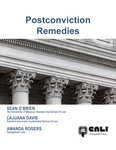
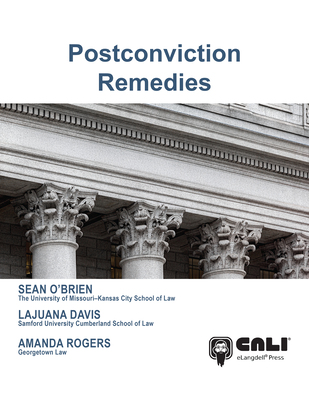
  • Postconviction Remedies by Sean O'Brien, LaJuana Davis, and Amanda Rogers

    Postconviction Remedies

    Sean O'Brien, LaJuana Davis, and Amanda Rogers

    Postconviction Remedies is designed for a one-semester survey course on federal and state habeas corpus, postconviction, and sentence correction procedures, with additional focus on innocence cases. It is also intended to give students a legal foundation for clinical advocacy work for people who are unjustly imprisoned. Although there is an exoneration somewhere in America every other day, courts and legislatures are moving to restrict avenues of relief against unjust convictions and sentences. This casebook is intended to enable students and instructors to understand the critical role of habeas corpus in protecting human rights and civil liberties in America. The casebook begins with an introduction to habeas corpus, its historical uses, and its unique role in fighting unjust government detention. It then traces the development of procedural doctrines through the Antiterrorism and Effective Death Penalty Act and explores the impact of the innocence phenomena on postconviction proceedings. Finally, the book examines legislative procedures enacted to correct unjust sentences that cannot be remedied through traditional postconviction procedures, using the First Step Act as a model.

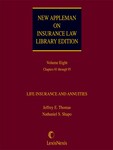
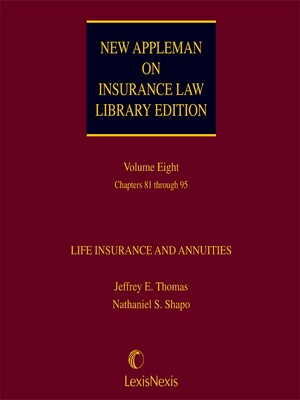
  • New Appleman on Insurance Law by Jeffery E. Thomas

    New Appleman on Insurance Law

    Jeffery E. Thomas

    The New Appleman set is recognized as the most authoritative, comprehensive, and up-to-date source for analysis of insurance law in the United States. It provides in-depth analysis and complete case law support for any insurance issue a practitioner may face including: contract formation; rights and duties under the insurance policy; contracts and policy issues; declaratory judgments; duties and liabilities of agents and brokers; liability insurance policies and exclusions; property, casualty, life, health and disability insurance; automobile insurance; professional liability insurance; excess insurance; reinsurance; and commercial insurance and bonds.

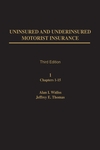
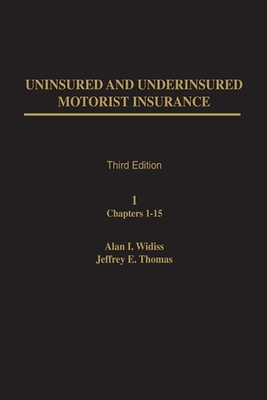
  • Uninsured and Underinsured Motorist Insurance by Jeffery E. Thomas and Alan I. Widiss

    Uninsured and Underinsured Motorist Insurance

    Jeffery E. Thomas and Alan I. Widiss

    Frequently cited and quoted by both state and federal courts, this newly-revised three-volume set provides a detailed examination of both the nature and scope of coverage and claims procedures for both types of insurance in every state. Combining lucid theoretical analysis with helpful practical insight, the text is amply annotated with references to the statutory and case law of every state.

    Volume One is devoted to the analysis of questions relating to uninsured motorist insurance coverage, including covered persons, covered vehicles, covered injuries, "hit and run" accidents, multiple coverages, and coverage limitations.

    Volume Two provides a comprehensive discussion of the uninsured motorist insurance claims process, including protection and preservation of claims, settlement of tort and insurance claims, mediation and arbitration of coverage disputes, and litigation of tort and insurance claims.

    Volume Three offers a detailed examination of both coverage and claims issues relating to underinsured motorist insurance, including vehicle coverage limitations, limitations of liability, protection and preservation of claims, and arbitration and settlement of tort and insurance claims.

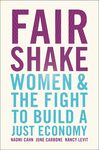
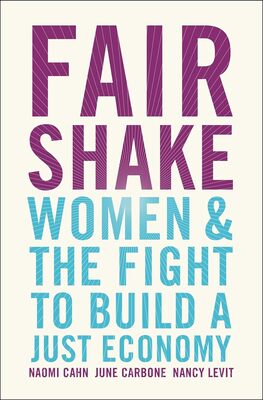
  • Fair Shake: Women and the Fight to Built a Just Economy by Naomi Cahn, June Carbone, and Nancy Levit

    Fair Shake: Women and the Fight to Built a Just Economy

    Naomi Cahn, June Carbone, and Nancy Levit

    In an era of supposed great equality, women are still falling behind in the workplace. Even with more women in the workforce than in decades past, wage gaps continue to increase. It is the most educated women who have fallen the furthest behind. Blue-collar women hold the most insecure and badly paid jobs in our economy. And even as we celebrate high-profile representation—women on the board of Fortune 500 companies and our first female vice president—women have limited recourse when they experience harassment and discrimination.

    Fair Shake: Women and the Fight to Build a Just Economy explains that the system that governs our economy—a winner-take-all economy—is the root cause of these myriad problems. The WTA economy self-selects for aggressive, cutthroat business tactics, which creates a feedback loop that sidelines women. The authors, three legal scholars, call this feedback loop “the triple bind”: if women don’t compete on the same terms as men, they lose; if women do compete on the same terms as men, they’re punished more harshly for their sharp elbows or actual misdeeds; and when women see that they can’t win on the same terms as men, they take themselves out of the game (if they haven’t been pushed out already). With odds like these stacked against them, it’s no wonder women feel like, no matter how hard they work, they can’t get ahead.

    Fair Shake is not a “fix the woman” book; it’s a “fix the system” book. It not only diagnoses the problem of what's wrong with the modern economy, but shows how, with awareness and collective action, we can build a truly just economy for all.

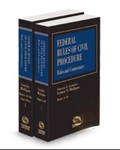
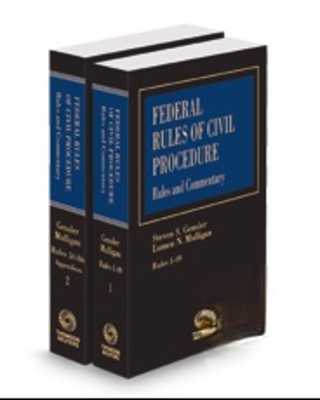
  • Federal Rules of Civil Procedure, Rules and Commentary by Steven S. Gensler and Lumen N. Mulligan

    Federal Rules of Civil Procedure, Rules and Commentary

    Steven S. Gensler and Lumen N. Mulligan

    This is the premier practice-oriented guide to using the Federal Rules of Civil Procedure, written by two leading experts including a former member of the Civil Rules Advisory Committee. No other resource provides this level of breadth, depth, and expertise in such a concise and easy-to-use format.

    For each rule, the authors explain in detail what the rule covers, how it works, how it has been interpreted by courts, and how it is used in practice. This title provides the most complete and current discussion possible; it is updated annually with new rule amendments, the latest caselaw, and emerging trends and issues integrated directly into the analysis.

    Extensive citations to current caselaw and the best foundational precedents allow users to quickly find relevant cases and determine local practice and interpretation. Special emphasis and expanded coverage is given to the topics that matter the most in practice, including pleading and amendments, motions to dismiss, discovery, and summary judgment.

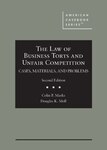
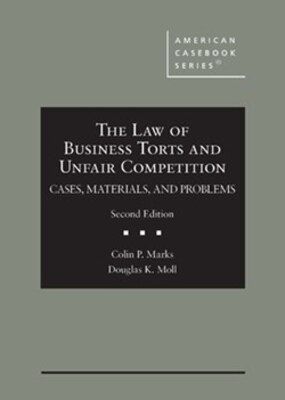
  • The Law of Business Torts and Unfair Competition: Cases, Materials, and Problems by Colin P. Marks and Douglas K. Moll

    The Law of Business Torts and Unfair Competition: Cases, Materials, and Problems

    Colin P. Marks and Douglas K. Moll

    This is the first book to comprehensively integrate business torts (also known as economic torts) and unfair competition actions. The book covers all of the major tort causes of action that one might see in a commercial litigation practice, including the economic loss rule, fraud, negligent misrepresentation, tortious interference with contract and prospective contract, breach of fiduciary duty, insurance torts, breach of the duty of good faith, deceptive marketing, commercial disparagement, misappropriation, trade secrets, trademark infringement, antitrust, and civil RICO. The book also covers important state, federal, and model provisions, including the Second and Third Restatement of Torts, the Third Restatement of Unfair Competition, the Restatement of the Law of Liability Insurance, the Lanham Act, the Uniform Trade Secrets Act, and the Defend Trade Secrets Act. The authors have included numerous questions and problems to further students’ thinking on more complex topics.

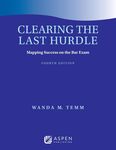
  • Clearing the Last Hurdle: Mapping Success on the Bar Exam, Fourth Edition by Wanda M. Temm

    Clearing the Last Hurdle: Mapping Success on the Bar Exam, Fourth Edition

    Wanda M. Temm

    Clearing the Last Hurdle: Mapping Success on the Bar Exam by Wanda M. Temm is designed as a comprehensive textbook for a for-credit bar preparation course. This all-inclusive textbook includes substantive outlines on all Multistate Bar Exam (MBE) topics and all Multistate Essay Exam (MEE) topics and is also easily adaptable for state-specific jurisdictions. Clearing the Last Hurdle focuses on guiding a law student in understanding the tasks involved in bar preparation; giving the student specific suggestions on how to study; and providing sufficient practice questions to improve the student's skills in answering MBE, essay, and performance test questions. In addition, it emphasizes using mind maps, which allow a student to make the necessary associations between concepts for better memory retention and recall, to order thinking about each topic. The book includes practice questions in all three formats--multiple choice, essay, and performance tests--with score sheets to more specifically guide students in how to review their practice answers. The teacher's manual includes student sample answers with score sheets to assist professors in understanding how to assess a bar exam essay.

    New to the Fourth Edition:

    • All-new essay questions (with score sheets)
    • New MBE questions included
    • Updated subject matter summaries

 
  • 1
  • 2
  • 3


Browse

  • Collections
  • Disciplines
  • Authors

Search

Advanced Search

  • Notify me via email or RSS
  • Author FAQ

Visit UMKC Law

  • UMKC Law School
  • Leon E. Bloch Law Library
  • Faculty Directory
 
Elsevier - Digital Commons

Home | About | FAQ | My Account | Accessibility Statement | DMCA Information

Privacy Copyright Request an accommodation for accessibility