









• Home
  • Search
  • Browse Collections
  • My Account
  • About
  • DC Network Digital Commons Network™
Skip to main content
UMKC School of Law Institutional Repository University of Missouri-Kansas City School of Law
  • Home
  • About
  • FAQ
  • My Account
  1. Home
  2. >
  3. Faculty Scholarship
  4. >
  5. Books

Books

 
Printing is not supported at the primary Gallery Thumbnail page. Please first navigate to a specific Image before printing.

Follow

Switch View to Grid View Slideshow
 
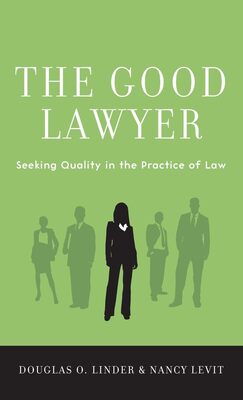
  • The Good Lawyer: Seeking Quality in the Practice of Law by Douglas O. Linder and Nancy O. Levit

    The Good Lawyer: Seeking Quality in the Practice of Law

    Douglas O. Linder and Nancy O. Levit

    Every lawyer wants to be a good lawyer. They want to do right by their clients, contribute to the professional community, become good colleagues, interact effectively with people of all persuasions, and choose the right cases. All of these skills and behaviors are important, but they spring from hard-to-identify foundational qualities necessary for good lawyering. After focusing for three years on getting high grades and sharpening analytical skills, far too many lawyers leave law school without a real sense of what it takes to be a good lawyer.

    In The Good Lawyer, Douglas O. Linder and Nancy Levit combine evidence from the latest social science research with numerous engaging accounts of top-notch attorneys at work to explain just what makes a good lawyer. They outline and analyze several crucial qualities: courage, empathy, integrity, diligence, realism, a strong sense of justice, clarity of purpose, and an ability to transcend emotionalism. Many qualities require apportionment in the right measure, and achieving the right balance is difficult. Lawyers need to know when to empathize and also when to detach; courage without an appreciation of consequences becomes recklessness; working too hard leads to exhaustion and mistakes. And what do you do in tricky situations, where the urge to deceive is high? How can you maintain focus through a mind-taxing (or mind-numbing) project? Every lawyer faces these problems at some point, but if properly recognized and approached, they can be overcome.

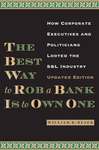
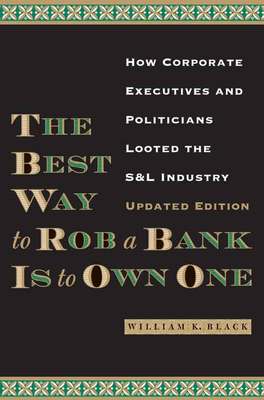
  • The Best Way to Rob a Bank is to Own One: How Corporate Executives and Politicians Looted the S&L Industry by William K. Black

    The Best Way to Rob a Bank is to Own One: How Corporate Executives and Politicians Looted the S&L Industry

    William K. Black

    In this expert insider’s account of the savings and loan debacle of the 1980s, William Black lays bare the strategies that corrupt CEOs and CFOs—in collusion with those who have regulatory oversight of their industries—use to defraud companies for their personal gain. Recounting the investigations he conducted as Director of Litigation for the Federal Home Loan Bank Board, Black fully reveals how Charles Keating and hundreds of other S&L owners took advantage of a weak regulatory environment to perpetrate accounting fraud on a massive scale. In the new afterword, he also authoritatively links the S&L crash to the business failures of 2008 and beyond, showing how CEOs then and now are using the same tactics to defeat regulatory restraints and commit the same types of destructive fraud.

    Black uses the latest advances in criminology and economics to develop a theory of why “control fraud”—looting a company for personal profit—tends to occur in waves that make financial markets deeply inefficient. He also explains how to prevent such waves. Throughout the book, Black drives home the larger point that control fraud is a major, ongoing threat in business that requires active, independent regulators to contain it. His book is a wake-up call for everyone who believes that market forces alone will keep companies and their owners honest.

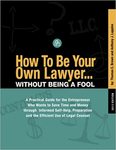
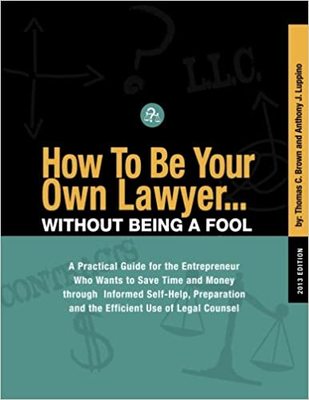
  • How To Be Your Own Lawyer… Without Being a Fool: A Practical Guide for The Entrepreneur Who Wants to Save Time and Money Through Informed Self-Help, Preparation, and the Efficient Use of Legal Counsel by Thomas C. Brown and Anthony J. Luppino

    How To Be Your Own Lawyer… Without Being a Fool: A Practical Guide for The Entrepreneur Who Wants to Save Time and Money Through Informed Self-Help, Preparation, and the Efficient Use of Legal Counsel

    Thomas C. Brown and Anthony J. Luppino

    The authors of this book have close to 75 years of experience advising business clients from new entrepreneurs to mature enterprises. During this time, they have seen countless examples of seemingly intelligent entrepreneurs trying to "save" time and money by acting as their own attorneys in negotiating business transactions. Unfortunately, the advent of the internet has made it much easier for "fools" to get into trouble by providing seemingly infinite numbers of downloadable contracts and forms. Most of the time, the unwary entrepreneur exposes himself or herself to great risk by using such documents without qualified legal counsel. Occasionally, however, the opposite can be true and downloaded documents from the internet can trigger a request for assistance from legal counsel, which most often leads to a successful outcome. The authors decided to write this book with two principal audiences in mind. First, although they recommend that you always consult an attorney, they wanted to offer to those entrepreneurs who choose not to heed this advice, certain pointers on how best to utilize several of the most common legal forms and documents they may try to download from one of the so-called "legal" websites or obtain from other sources. Second, through discussion of various issues and the use of examples provided in the book, they want to re-iterate and re-enforce the notion that trying to be your own lawyer is ill-advised, and thus speak to a second, and hopefully much larger audience- entrepreneurs who will realize they need to hire lawyers, but want to use them efficiently.

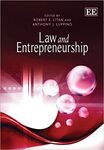
  • Law and Entrepreneurship by Robert E. Litan, Korein Tillery LLC, and Anthony J. Luppino

    Law and Entrepreneurship

    Robert E. Litan, Korein Tillery LLC, and Anthony J. Luppino

    The symbiosis that exists between entrepreneurship and law is of paramount importance in accommodating and advancing the freedom to innovate, as well as the need to prevent unfair and abusive activities. Seminal articles and essays reprinted in this collection examine several major subject areas of law associated with entrepreneurship, including intellectual property, restrictive covenants designed to protect proprietary information, business organizations, taxation, securities regulation and tort law. This collection presents issues implicated in both for-profit growth ventures and creative social enterprises. It also explores the roles of lawyers and trends in the education of law students to become professionals in fields ranging from valuable counselors to entrepreneurs.

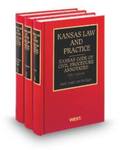
  • Kansas Law and Practice Vol. 4-6: Kansas Code of Civil Procedure Annotated, 5th edition by Spencer A. Gard, Robert C. Casad, and Lumen N. Mulligan

    Kansas Law and Practice Vol. 4-6: Kansas Code of Civil Procedure Annotated, 5th edition

    Spencer A. Gard, Robert C. Casad, and Lumen N. Mulligan

    Kansas Code of Civil Procedure, Annotated offers authoritative and practical guidance on the application of rules at all phases of Kansas litigation. A reference for civil litigators and trial judges, this work includes:

    • The text of the Code of Civil Procedure
    • Detailed author commentary and analysis
    • Variations from the federal rules
    • Notes of decisions
    • Citations to Kansas and federal cases, related law review publications, and library references, including pertinent Key Numbers for each civil rule
    • Advisory Committee notes
    • Notes of Kansas Jurors and detailed practice aids
    • References to legal products and components of LCP's Integrated Legal Research System

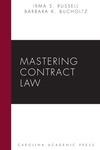
  • Mastering Contract Law by Irma S. Russell and Barbara K. Bucholtz

    Mastering Contract Law

    Irma S. Russell and Barbara K. Bucholtz

    Mastering Contract Law explores the basic principles and purposes of contract law, including a discussion of background principles and traditions of private ordering. The book explains contract formation, interpretation, and the requirement of written evidence for enforcement of certain types of promises. It explores the themes and doctrines of reliance, restitution, and the importance of public policy in contract law. Chapters include all of the areas of contract law typically covered in the first-year course, including the bargained-for exchange, unenforceable contracts, performance and breach, obstacles to performance, modification, pre-contractual obligation, remedies and damages, and stakeholders other than contracting parties, including the third-party beneficiary doctrine, delegation and assignment.

    The organization of the book reflects the five sequential questions that frame the thought processes of lawyers and judges dealing with contracts issues. For example, before considering whether a party’s conduct amounts to a breach, a judge would answer the question whether the parties had indeed formed a contract. In addition to explaining the major cases traditionally covered in contracts classes, the authors present common-sense examples and hypotheticals in order to link student intuitions about fairness and competition to the law of contracting.

  • The Happy Lawyer: Making a Good Life in the Law by Nancy Levit and Douglas O. Linder

    The Happy Lawyer: Making a Good Life in the Law

    Nancy Levit and Douglas O. Linder

    he Happy Lawyer examines the causes of dissatisfaction among lawyers, and then charts possible paths to happier and more fulfilling careers in law. Eschewing a one-size-fits-all approach, it shows how maximizing our chances for achieving happiness depends on understanding our own personality types, values, strengths, and interests.

    Covering everything from brain chemistry and the science of happiness to the workings of the modern law firm, Nancy Levit and Doug Linder provide invaluable insights for both aspiring and working lawyers. For law students, they offer surprising suggestions for selecting a law school that maximizes your long-term happiness prospects. For those about to embark on a legal career, they tell you what happiness research says about which potential jobs hold the most promise. For working lawyers, they offer a handy toolbox - a set of easily understandable steps - that can boost career happiness. Finally, for firm managers, they offer a range of approaches for remaking a firm into a more satisfying workplace.

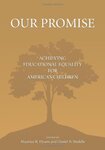
  • Our Promise: Achieving Educational Equality for America's Children by Maurice R. Dyson and Daniel B. Weddle

    Our Promise: Achieving Educational Equality for America's Children

    Maurice R. Dyson and Daniel B. Weddle

    With the reauthorization and possible impending repeal of the No Child Left Behind Act in the next presidential administration, and the Supreme Court's recent education pronouncements involving race in K-12 education and higher education, along with the mounting concerns regarding school finance and testing, this compendium of works by nationally distinguished contributors, leading thinkers and policymakers who hail from a broad variety of disciplines represents the first effort to explore educational law through the interrelated fields of "critical race education," sociology, civil rights, pedagogical theory and law.

    Contributors include William Kaplan, Maurice Dyson, Preston Green, Bruce Baker, Angela Onwuachi Willig, Verna Williams, Victoria Dodd, Molly O'Brien and several more, with a foreword by T.K. Daniels.

    This critical reader of scholarly articles, essays and critiques explores the intractable issues in the landscape of educational equality, including school finance, special education, affirmative action, desegregation, curricular reform and bilingual education, through the prism of race, ethnicity, language, disability, socioeconomic status, sex and gender.

    Written by and for educators and policymakers, Our Promise is an ideal seminar text or companion piece for education, civil rights, sociology, economics and race-oriented interdisciplinary courses. An indispensable classroom tool for comprehending policy discussions, Our Promise is also well-suited for adoption in undergraduate and graduate education schools and public policy administration programs across the nation.

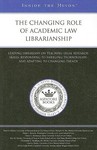
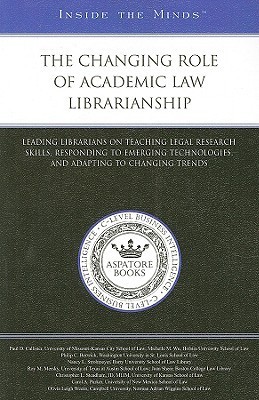
  • The Changing Role of Academic Law Librarianship: Leading Librarians on Teaching Legal Research Skills, Responding to Emerging Technologies, and Adapting to Changing Trends by Phillip C. Berwick, Paul D. Callister, Roy M. Mersky, Carol A. Parker, Joan Shear, Christopher L. Steadham, Nancy L. Strohmeyer, Olivia Leigh Weeks, and Michelle M. Wu

    The Changing Role of Academic Law Librarianship: Leading Librarians on Teaching Legal Research Skills, Responding to Emerging Technologies, and Adapting to Changing Trends

    Phillip C. Berwick, Paul D. Callister, Roy M. Mersky, Carol A. Parker, Joan Shear, Christopher L. Steadham, Nancy L. Strohmeyer, Olivia Leigh Weeks, and Michelle M. Wu

    The Changing Role of Academic Law Librarianship contains the thoughts of leading librarians on teaching legal research skills, responding to emerging technologies, and adapting to changing trends. It provides perspective on key strategies for understanding and navigating trends in law librarianship. This book offers tips on addressing some of the challenges inherent in a changing landscape, such as improving interlibrary loan services, cultivating modern pedagogy, and evaluating titles and volume counts. Coverage includes:

    • Simulating student legal research skills

    • Digitizing rare materials in collections, marketing, and communicating services

    • Maximizing the librarian's managerial role

    • Monitoring budgets

    • Allocating resources

    • Harnessing new technologies

    • Enhancing research education

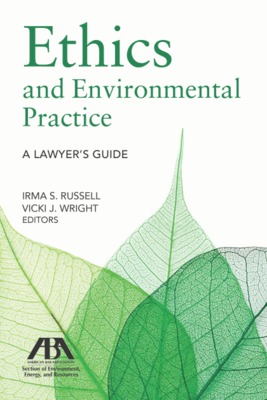
  • Issues of Legal Ethics in the Practice of Environmental Law by Irma S. Russell

    Issues of Legal Ethics in the Practice of Environmental Law

    Irma S. Russell

    The purpose of this book is to identify and explore questions of legal ethics that environmental lawyers may encounter in representing industrial clients, government agencies, individuals, public interest groups, and others. One might ask why a book on ethics in the environmental area is necessary. After all, the rules of ethics apply to all lawyers regardless of their area of practice. This book examines the evolving responsibilities and problems of lawyers practicing environmental law, addressing fundamental principles of ethics to apply these rules to the difficult context of environmental practice. Thus, the book focuses primarily on those rules of ethics that raise significant concerns for the environmental practitioner. Additionally, the commentary presented here seeks to provide sufficient background on the ethics rules to facilitate meaningful analysis of the ethical issues arising in the environmental context.

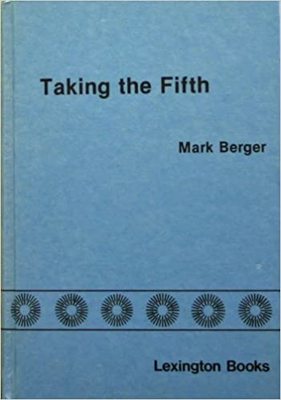
  • Taking the Fifth: The Supreme Court and the Privilege against Self-Incrimination by Mark Berger

    Taking the Fifth: The Supreme Court and the Privilege against Self-Incrimination

    Mark Berger

    Consistently, through many centuries, the right to remain silent has protected individuals against abuses of state authority and has established a sphere of privacy into which the state could not intrude. Traditionally, a broad view has been taken by the supreme court of the degree of incrimination necessary to justify invocation of the fifth amendment. Included have been complete confessions of guilt and admissions of the essential elements of crime. Also covered are relations constituting a 'link in the chain of testimony' leading toward a conviction. Similarly, testimony that could be used to 'search out other testimony to be used in evidence' is covered by the privilege. The practical effect of the incrimination standard is to make rejection of a claim of privilege difficult, thereby frustrating the state's ability to acquire information. In recent years, however, with the exception of the core fifth amendment right of the defendant to refuse to take the witness stand at his/her own trial, privilege interests are narrowly construed and substantially undercut even where recognized. To reverse the trend toward the constriction of the privilege against self-incrimination, a thorough re-evaluation of the entire body of fifth amendment doctrine is necessary. This re-evaluation should examine protection of the sanctity of documents, consider procedural reform in the administration of the privilege against self-incrimination, and examine a total revamping of the court's approach to balancing the state's interests in the application of the fifth amendment. Notes, a bibliography, a table of cases, and an index are provided.

 
  • 1
  • 2
  • 3


Browse

  • Collections
  • Disciplines
  • Authors

Search

Advanced Search

  • Notify me via email or RSS
  • Author FAQ

Visit UMKC Law

  • UMKC Law School
  • Leon E. Bloch Law Library
  • Faculty Directory
 
Elsevier - Digital Commons

Home | About | FAQ | My Account | Accessibility Statement | DMCA Information

Privacy Copyright Request an accommodation for accessibility